EMDR for Attachment Injuries
Heal attachment wounds and support lasting change - advanced EMDR strategies for developmental trauma.


Many clients come to therapy carrying painful attachment histories - neglect, emotional inconsistency, rejection, or relational trauma. These early experiences can shape a lifetime of challenges: low self-worth, emotional reactivity, avoidance of intimacy, compulsive behaviors, and troubled relationships.
In this advanced course, EMDR expert Debra Wesselmann, from Francine Shapiro's EMDR Institute, shows you how to work effectively with attachment injuries using the full EMDR framework. You’ll learn how to identify and reprocess unhealed developmental memories, respond to present-day relational triggers, and help clients build new internal experiences of safety and connection.
You’ll also gain practical tools for working with children and families, including strategies to involve parents in the EMDR process and interrupt the intergenerational transmission of insecure attachment.
Whether you’re working with adults, adolescents, or children, this course will deepen your clinical skill and give you concrete strategies to support emotional healing and developmental repair.
This course is taught by Debra Wesselmann, internationally respected EMDR trainer, therapist, and author known for her work integrating EMDR with attachment-focused treatment.
Co-founder of the Attachment and Trauma Center of Nebraska and a senior trainer with Francine Shapiro’s EMDR Institute, Debra brings over 30 years of experience treating developmental trauma and disrupted attachment.
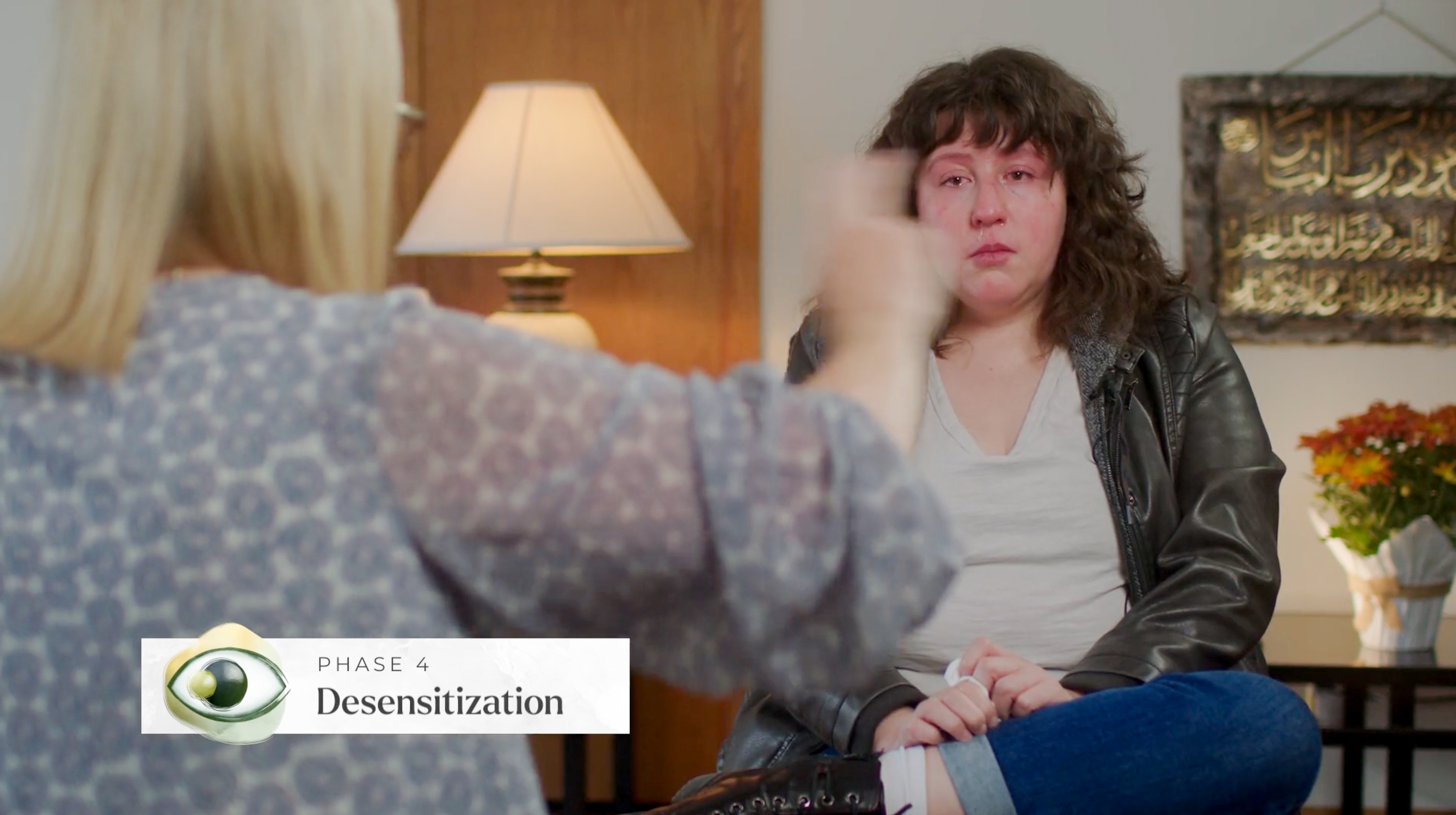
The training features her clear instruction, therapy demonstrations, and practical strategies for applying EMDR in complex attachment cases. It also includes rare archival footage of EMDR founder Francine Shapiro, together with insights from other leading EMDR experts, offering a rich and multidimensional perspective on attachment-informed practice. See all course contributors here.

By the end of this course, you’ll be able to:
Recognize and differentiate key insecure attachment styles—dismissive, preoccupied, and disorganized - and understand how they present in clinical work (e.g., avoidance, aggression, emotional dysregulation, compulsivity)
Use attachment-informed history taking and treatment planning to identify key relational wounds
Apply EMDR techniques to help clients reprocess disturbing early memories and shift present-day responses
Strengthen clients’ reflective functioning using strategies grounded in Fonagy and Bateman’s work on mentalization - a key capacity often disrupted in attachment trauma
Build internal resources through creative visualizations that support developmental repair
Use future template adaptations to promote healthier relational expectations and behaviors
Involve parents in the 8 phases of EMDR with younger clients to foster healing within the family system
Navigate obstacles to therapy rooted in different attachment styles, and tailor your approach to strengthen engagement and therapeutic progress

This six-week course combines expert instruction, clinical demonstrations, and real-world strategies to deepen your EMDR practice with attachment-related trauma.
Beautifully produced video lessons that guide you through attachment-focused EMDR strategies step-by-step
Therapy demonstrations and case examples showing how to apply EMDR techniques with clients across a range of ages and presentations
Expert interviews exploring key topics such as reflective capacity, developmental trauma, and working with family systems
Downloadable tools and handouts to support practical application in your sessions
An interactive forum where you can ask questions, share insights, and get direct feedback from course instructor Debra Wesselmann
Enrollments
We're happy to help if you can't attend the current intake. Please contact our customer service once your purchase is finalized, and we can enroll you in the intake of your choice.
If you need an invoice, please fill out the form here.
There are 12 CE/CME hours plus 12 EMDRIA points available for eligible participants (see Learner Notification here).


Welcome to EMDR for Attachment Injuries.

We delve into the importance of attachment, its impacts on mental health and the associated research.

This module investigates what secure attachment is.

We explore dismissive attachment, with therapy demonstrations focused on recognising clues

We learn what preoccupied attachment is and how to recognize the clues.

We explore disorganised attachment in this module, learning how to recognize the clues.

Mixed attachment patterns are the focus of this module, with therapy demonstrations utilized to reinforce learning.

This module looks at obstacles to the utilization of therapy.

The focus of this module is the EMDR 8 Phases and their application to attachment injuries.

Quiz questions

We begin by investigating why EMDR is a powerful approach for attachment injuries

This module addresses poor reflective capacity.

Attachment-informed history taking and treatment planning are covered in this module.

This module explores the steps required for history taking and treatment planning.

This module explores challenging behaviors, giving practical tips on how to deal with them in session.

Quiz Questions

Introduction to the week

This module covers resource development and installation for grounded adult state.

We explore what a safe place for the adult self looks like, how to set it up and troubleshoot potential problems.

We explore what a safe place for the child part of self looks like, how to set it up and troubleshoot potential problems.

We explore how to develop and utilise attachment related resource figures.

This module covers self-regulation development and installation.

This module covers a helpful activity 'Dominos' you can use with clients for finding triggers, and developing insights into problems.

You will learn future rehearsal strategies for helping clients with entrenched defensive patterns to bring new patterns, skills, and resources into their present-day interactions and challenges.

Quiz Questions

The module details how to get started.

This module covers phase 3 - assessment

We investigate how to reprocess recent triggers.

This module delves into future templates, with therapy demonstrations to guide the learning experiences.

We learn how to target maladaptive positive emotions in this module.

Quiz Questions

This module focuses on accessing memories.

This module covers phase 3 - assessment.

We delve into how to stay time-orientated, with therapy demonstrations to enhance the learning experience.

In this module we focus on getting unstuck using interweaves.

This module contains a reprocessing case study.

A second case study on reprocessing is featured in this module.

This module covers how to move forward with treatment.

Quiz Questions

We begin week six by exploring the rationale for involving the family.

We look at attachment and trauma education in this module.

This module focuses on strengthening mature state and creating positive sense of self through the parents' eyes.

We explore what ARD messages of love look like in session.

This module focuses on ARD as a safe place for the younger part of the child.

This module covers family activities, with therapy demonstrations to guide the learning experiences.

This module covers self-help resources for parents.

This module explores involving parents in reprocessing.

Course completion and final quiz questions.